


Introduction to Root Cause Analysis (RCA) in Industrial Maintenance
In modern industrial environments, unexpected equipment failures can lead to costly downtime, production losses, safety risks, and reduced asset reliability. This is where Root Cause Analysis (RCA) becomes a critical engineering discipline. Rather than treating symptoms of failure, Root Cause Analysis (RCA) focuses on identifying the underlying causes that lead to equipment breakdowns.
A well-executed Root Cause Analysis (RCA) allows maintenance teams to move from reactive firefighting to proactive reliability engineering. Instead of repeatedly fixing the same issue, organizations eliminate the origin of the problem and improve long-term system performance.
In this comprehensive guide, we will explore a structured, engineering-based approach to Root Cause Analysis (RCA), specifically designed for industrial equipment failures.
What is Root Cause Analysis (RCA)?
Root Cause Analysis (RCA) is a systematic process used to identify the fundamental cause of a failure or problem. In industrial maintenance, it is applied to mechanical, electrical, hydraulic, and control system failures.
The goal of Root Cause Analysis (RCA) is not just to answer what failed, but to determine:
- Why did it fail?
- How did it fail?
- What system allowed the failure to occur?
- What corrective actions will prevent recurrence?

Engineer performing Root Cause Analysis (RCA) using industrial diagnostic software dashboard
Why Root Cause Analysis (RCA) is Critical in Industrial Systems
Industrial facilities operate under high loads, continuous cycles, and complex interdependencies. Without structured Root Cause Analysis (RCA), organizations risk recurring failures.
Key benefits of Root Cause Analysis (RCA) include:
- Reduction in unplanned downtime
- Improved equipment reliability and lifespan
- Lower maintenance costs
- Enhanced safety and compliance
- Better decision-making in maintenance planning
When properly implemented, Root Cause Analysis (RCA) becomes a core part of a reliability-centered maintenance strategy, supporting long-term asset performance optimization.
Step 1: Define the Problem Clearly in Root Cause Analysis (RCA)
The first step in Root Cause Analysis (RCA) is precise problem definition. A vague problem statement leads to incorrect conclusions.
What to include in problem definition:
- Equipment identification (asset ID, model, location)
- Failure description
- Time and date of failure
- Operational conditions at failure time
- Observed symptoms
Example:
Instead of saying “Pump failure”, define it as:
“Centrifugal pump P-104 experienced sudden vibration increase followed by seal leakage during continuous operation at 85% load.”
A clear definition ensures the Root Cause Analysis (RCA) process starts with accurate data.
Step 2: Collect Data for Root Cause Analysis (RCA)
Data collection is the backbone of any successful Root Cause Analysis (RCA). Without evidence, conclusions become assumptions.
Types of data required:
- Maintenance history logs
- Sensor data (vibration, temperature, pressure)
- Operator reports
- Visual inspection findings
- Spare parts replacement history

Technician collecting physical evidence during Root Cause Analysis (RCA) of gearbox failure
A strong Root Cause Analysis (RCA) depends on combining field data with operational history.
Step 3: Identify Failure Modes in Root Cause Analysis (RCA)
At this stage, engineers identify how the failure occurred. This is often supported by tools such as Failure Mode and Effects Analysis (FMEA), which is widely used in reliability engineering frameworks such as Failure Mode and Effects Analysis (FMEA).
Common failure modes include:
- Mechanical wear and fatigue
- Electrical short circuits
- Lubrication failure
- Misalignment or imbalance
- Human operational error
Understanding failure modes helps narrow down the scope of Root Cause Analysis (RCA) and prevents misdiagnosis.
Step 4: Analyze the Cause-and-Effect Chain in Root Cause Analysis (RCA)
This step focuses on mapping how the failure developed over time.
Tools used in this phase:
- 5 Whys Technique
- Fishbone (Ishikawa) Diagram
- Fault Tree Analysis
The Root Cause Analysis (RCA) process should trace:
- Immediate cause (symptom trigger)
- Contributing causes
- Systemic causes
- Root cause (fundamental breakdown)
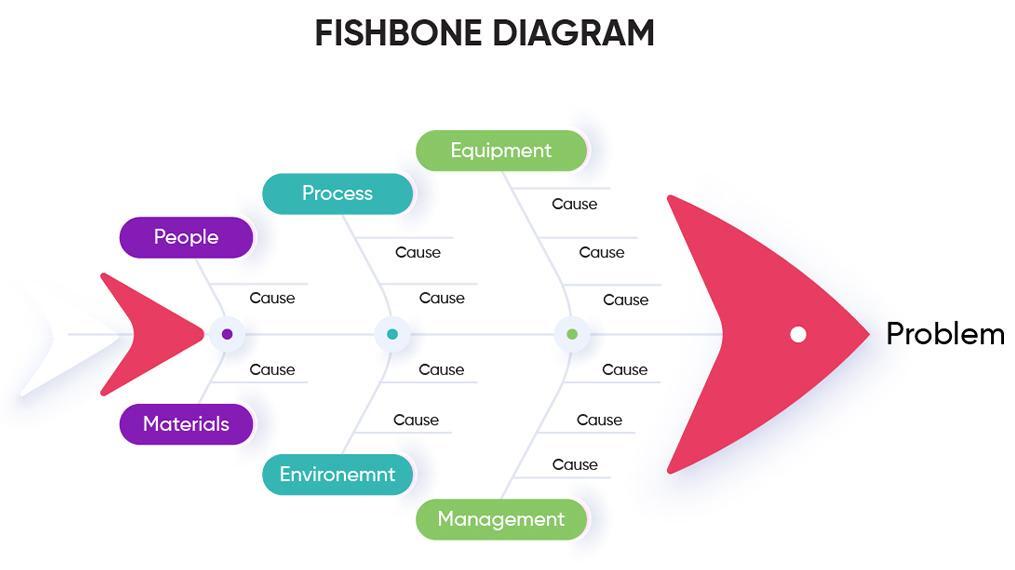
Fishbone diagram illustrating Root Cause Analysis (RCA) structure for equipment failure investigation
A disciplined Root Cause Analysis (RCA) ensures the investigation goes beyond surface-level issues.
Step 5: Identify the Root Cause in Root Cause Analysis (RCA)
The most critical phase of Root Cause Analysis (RCA) is isolating the true root cause.
Examples of root causes:
- Improper maintenance procedures
- Design flaws in equipment
- Inadequate lubrication intervals
- Operator training deficiencies
- Poor environmental conditions
A correct Root Cause Analysis (RCA) distinguishes between:
- Symptoms (vibration, leakage)
- Causes (misalignment, wear)
- Root causes (absence of alignment procedure or monitoring system)
Without this distinction, Root Cause Analysis (RCA) fails to deliver long-term reliability improvement.
Step 6: Implement Corrective Actions from Root Cause Analysis (RCA)
Once the root cause is identified, corrective actions must be implemented.
Types of corrective actions:
- Engineering modifications
- Maintenance strategy updates
- Procedural changes
- Training programs
- Condition monitoring implementation

Engineers implementing corrective actions after Root Cause Analysis (RCA) in industrial plant
A successful Root Cause Analysis (RCA) always results in actionable improvements, not just documentation.
Step 7: Validate and Monitor Results in Root Cause Analysis (RCA)
After implementing solutions, the next step in Root Cause Analysis (RCA) is validation.
Key validation methods:
- Monitoring failure recurrence rates
- Analyzing performance KPIs
- Reviewing maintenance logs
- Conducting periodic audits
If the issue reappears, the Root Cause Analysis (RCA) process must be repeated or refined.
Common Mistakes in Root Cause Analysis (RCA)
Even experienced engineers make errors during Root Cause Analysis (RCA).
Frequent mistakes include:
- Stopping at symptoms instead of root causes
- Relying on assumptions instead of data
- Lack of cross-functional collaboration
- Ignoring human and procedural factors
- Poor documentation of findings
Avoiding these mistakes significantly improves the effectiveness of Root Cause Analysis (RCA).
Root Cause Analysis (RCA) and Industrial Maintenance Strategy
Modern industrial maintenance integrates Root Cause Analysis (RCA) into broader reliability frameworks such as preventive and predictive maintenance strategies.
Organizations that adopt structured Root Cause Analysis (RCA) typically experience:
- Higher Overall Equipment Effectiveness (OEE)
- Reduced emergency maintenance
- Better spare parts planning
- Increased asset lifecycle value
In advanced plants, Root Cause Analysis (RCA) is supported by digital transformation tools such as SCADA, CMMS, and IoT-based monitoring systems.
Advanced Techniques in Root Cause Analysis (RCA)
To enhance accuracy, engineers often combine Root Cause Analysis (RCA) with advanced methodologies:
- Vibration analysis for rotating equipment
- Thermography for electrical systems
- Oil analysis for lubrication systems
- AI-based predictive analytics
These technologies improve the precision of Root Cause Analysis (RCA) and reduce human error.
Building a Culture of Root Cause Analysis (RCA)
For long-term success, Root Cause Analysis (RCA) must be embedded into organizational culture.
Key cultural elements:
- Encouraging transparent reporting of failures
- Eliminating blame culture
- Training maintenance teams regularly
- Standardizing RCA documentation
- Encouraging cross-department collaboration
A strong culture ensures that Root Cause Analysis (RCA) becomes a continuous improvement tool rather than a one-time investigation.
Conclusion: Mastering Root Cause Analysis (RCA) for Industrial Reliability
Root Cause Analysis (RCA) is not just a troubleshooting method—it is a strategic engineering approach that transforms how industrial facilities manage failures. By systematically identifying and eliminating root causes, organizations can significantly improve reliability, safety, and operational efficiency.
When properly implemented, Root Cause Analysis (RCA) becomes a powerful driver of continuous improvement in industrial maintenance systems.
If your facility still relies on reactive maintenance, adopting structured Root Cause Analysis (RCA) is the first step toward operational excellence.
Call to Action (CTA)
Start integrating Root Cause Analysis (RCA) into your maintenance strategy today. Train your engineering team, standardize your investigation process, and move from reactive repairs to proactive reliability engineering. The performance of your entire plant depends on how effectively you analyze and eliminate failures.
Frequently Asked Questions (FAQ)
1. What is Root Cause Analysis (RCA) in simple terms?
Root Cause Analysis (RCA) is a structured method used to identify the real reason behind equipment failures instead of just fixing symptoms.
2. Why is Root Cause Analysis (RCA) important in industry?
It reduces downtime, improves equipment reliability, and prevents repeated failures in industrial systems.
3. What tools are used in Root Cause Analysis (RCA)?
Common tools include the 5 Whys, Fishbone Diagram, and Fault Tree Analysis.
4. How long does a Root Cause Analysis (RCA) take?
It depends on complexity, but it can range from a few hours for simple failures to several weeks for complex system breakdowns.
5. What is the difference between failure analysis and Root Cause Analysis (RCA)?
Failure analysis identifies what failed, while Root Cause Analysis (RCA) identifies why it failed and how to prevent it from happening again.