


Electrical energy powers virtually every industrial operation, from manufacturing plants and oil refineries to water treatment facilities and power generation stations. While electricity is essential for productivity, it also presents one of the most significant workplace hazards. Unexpected equipment startup, stored energy release, and inadequate isolation procedures can result in severe injuries, fatalities, equipment damage, and costly downtime.
Every year, workplace incidents involving hazardous energy continue to occur despite advances in industrial safety technologies. Investigations consistently reveal that many of these accidents could have been prevented through the proper application of Lockout/Tagout (LOTO) procedures.
Lockout/Tagout (LOTO) is widely recognized as one of the most important safety practices in industrial maintenance and electrical operations. It establishes a systematic process for isolating hazardous energy sources before maintenance, servicing, inspection, or repair activities begin.
For maintenance engineers, electrical technicians, reliability specialists, supervisors, and plant managers, understanding and implementing Lockout/Tagout (LOTO) procedures is critical for protecting personnel, maintaining regulatory compliance, and ensuring safe industrial operations.
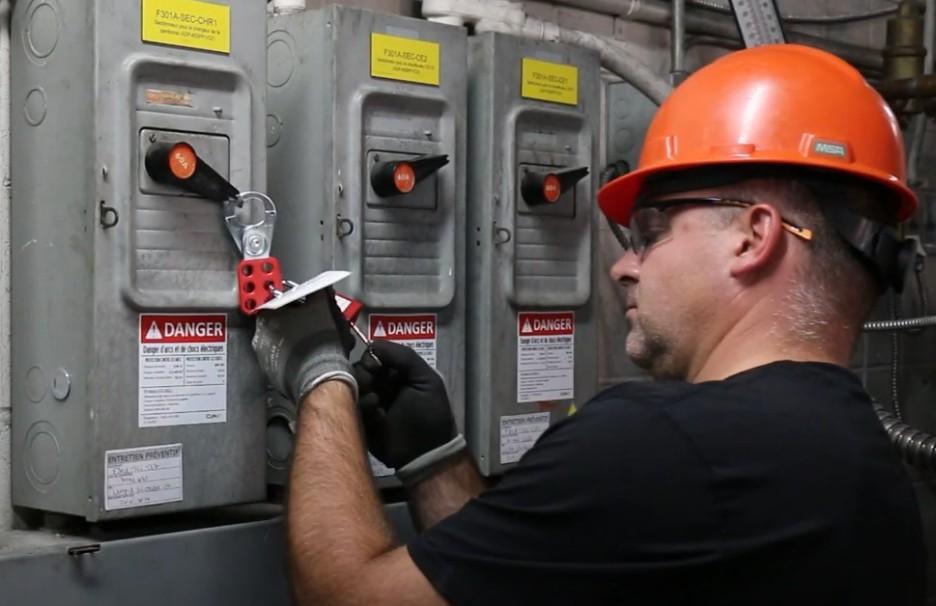
Technician performing Lockout/Tagout procedure on industrial electrical equipment.
Understanding Lockout/Tagout (LOTO)
Lockout/Tagout (LOTO) is a safety procedure used to ensure that dangerous machines, equipment, and energy sources are properly shut down, isolated, and rendered inoperative before maintenance or servicing work is performed.
The procedure prevents:
- Unexpected machine startup
- Electrical shock
- Arc flash incidents
- Release of stored energy
- Mechanical movement
- Hydraulic failures
- Pneumatic energy release
LOTO protects workers by physically preventing equipment from being energized until maintenance activities have been safely completed.
Why Lockout/Tagout Is Critical
Industrial facilities contain numerous hazardous energy sources.
Examples include:
- Electrical energy
- Mechanical energy
- Hydraulic energy
- Pneumatic energy
- Thermal energy
- Chemical energy
- Gravity energy
- Stored pressure energy
Failure to control these energy sources can result in catastrophic consequences.
Potential outcomes include:
- Electrocution
- Severe burns
- Crushing injuries
- Amputations
- Arc flash injuries
- Fatal accidents
- Equipment damage
Lockout/Tagout (LOTO) serves as a critical barrier between workers and hazardous energy.
Understanding Hazardous Energy Sources
Before implementing effective LOTO procedures, personnel must understand the various forms of hazardous energy present within industrial facilities.
Electrical Energy
Electrical systems represent one of the most dangerous workplace hazards.
Sources include:
- Switchgear
- Motor Control Centers (MCCs)
- Transformers
- Distribution panels
- Motors
- Generators
- Variable Frequency Drives (VFDs)
Even after power is disconnected, stored electrical energy may remain in capacitors and electronic components.
Mechanical Energy
Mechanical energy originates from moving equipment.
Examples include:
- Rotating shafts
- Conveyor belts
- Gearboxes
- Flywheels
- Industrial robots
- Presses
Unexpected movement can cause severe injuries.
Hydraulic Energy
Hydraulic systems often contain stored pressure.
Potential hazards include:
- Sudden movement
- Fluid injection injuries
- Component failures
Stored hydraulic pressure must be safely released before maintenance begins.
Pneumatic Energy
Compressed air systems can release significant force unexpectedly.
Common sources include:
- Air compressors
- Pneumatic cylinders
- Control valves
- Actuators
Pressure release procedures are essential.
Thermal Energy
Hot surfaces and steam systems present additional hazards.
Examples include:
- Boilers
- Heat exchangers
- Furnaces
- Steam lines
Workers must verify safe temperatures before servicing equipment.
Gravity Energy
Elevated components can create dangerous stored potential energy.
Examples include:
- Raised equipment
- Suspended loads
- Counterweights
- Hydraulic lifts
Mechanical blocking may be required before maintenance.

Identification of electrical, hydraulic, pneumatic, and mechanical energy sources for LOTO.
The Objectives of Lockout/Tagout Procedures
The primary purpose of Lockout/Tagout (LOTO) is to establish a zero-energy state before maintenance activities begin.
Key objectives include:
- Protecting workers from injury
- Preventing accidental startup
- Eliminating stored energy hazards
- Ensuring regulatory compliance
- Reducing workplace accidents
- Supporting safe maintenance operations
An effective LOTO program significantly improves overall facility safety performance.
Components of a Lockout/Tagout Program
A comprehensive Lockout/Tagout (LOTO) program includes multiple elements.
Written Procedures
Every piece of equipment should have documented energy isolation procedures.
Procedures should identify:
- Energy sources
- Isolation points
- Shutdown sequence
- Verification requirements
Lockout Devices
Lockout devices physically prevent equipment from being energized.
Common examples include:
- Padlocks
- Breaker lockouts
- Valve lockouts
- Plug lockouts
- Cable lockout systems
These devices ensure isolation cannot be removed unintentionally.
Tagout Devices
Tags provide warning information.
Typical tag information includes:
- Worker name
- Department
- Date applied
- Reason for isolation
Tags communicate that equipment must not be operated.
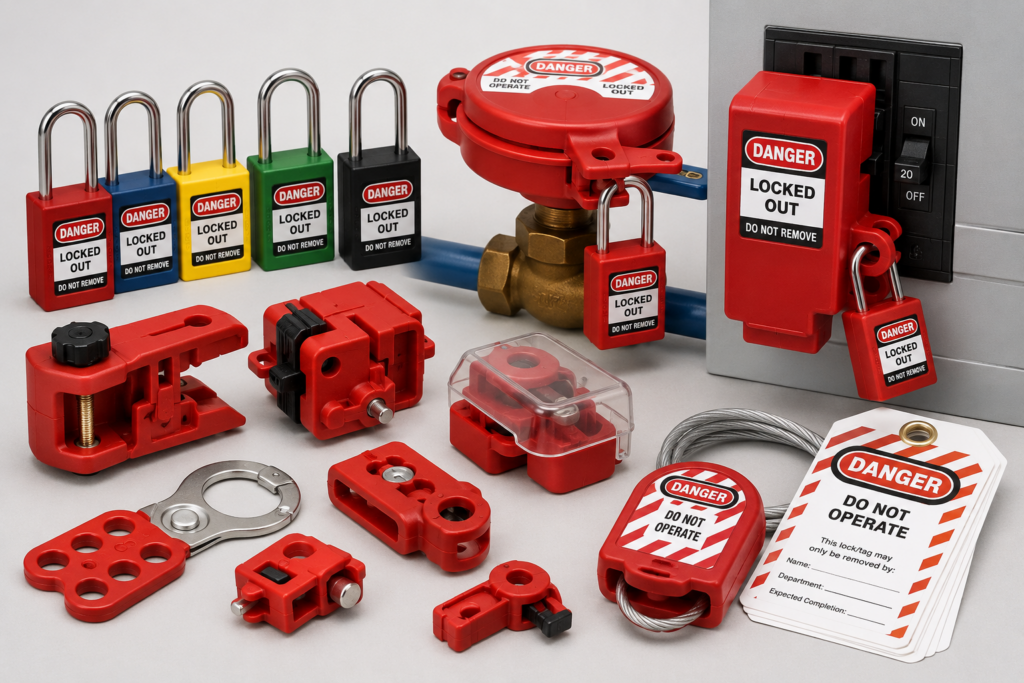
Common Lockout/Tagout devices used for hazardous energy control.
Step-by-Step Lockout/Tagout Procedure
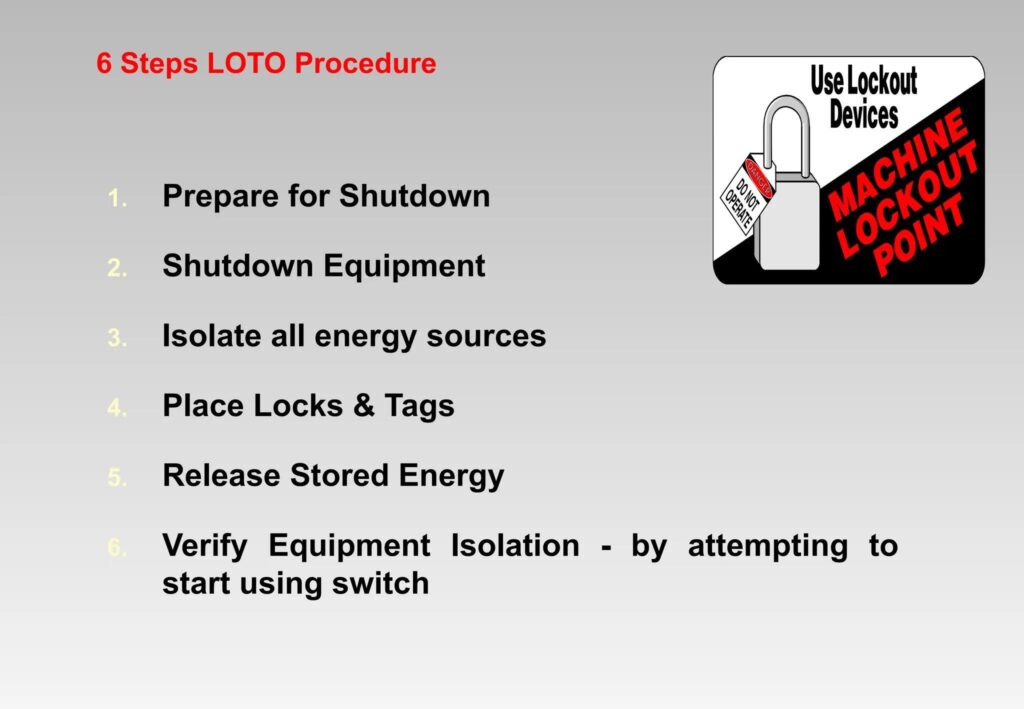
A structured process is essential for effective hazardous energy control.
Step 1: Preparation
Before shutdown begins, personnel must:
- Review procedures
- Identify energy sources
- Understand equipment operation
- Notify affected employees
Proper planning reduces errors.
Step 2: Equipment Shutdown
The equipment should be shut down using normal operating controls.
Examples include:
- Stop buttons
- Control panels
- HMI systems
- PLC commands
This ensures an orderly shutdown.
Step 3: Energy Isolation
All energy sources must be isolated.
Examples include:
- Opening disconnect switches
- Closing isolation valves
- Disconnecting power sources
- Blocking moving components
Complete isolation is critical.
Step 4: Apply Lockout Devices
Authorized personnel apply personal locks to each isolation point.
Key principles:
- One lock per worker
- Unique key ownership
- No shared keys
Each worker must maintain control of their lock.
Step 5: Apply Tags
Warning tags are attached to lockout devices.
Tags should remain clearly visible.
Step 6: Release Stored Energy
Residual energy must be eliminated.
Examples include:
- Discharging capacitors
- Releasing hydraulic pressure
- Venting compressed air
- Lowering elevated loads
Failure to address stored energy is a common cause of accidents.
Step 7: Verification of Isolation
Verification is one of the most critical steps.
Personnel must confirm:
- Equipment cannot start
- Voltage is absent
- Pressure has been released
- Movement is impossible
Never assume isolation is effective.
Always verify.

Verification of electrical isolation using a voltage testing instrument.
Electrical Lockout/Tagout Procedures
Electrical systems require specialized precautions.
Isolation of Electrical Equipment
Examples include:
- Circuit breakers
- Disconnect switches
- MCC feeders
- Transformer supplies
Isolation points must be clearly identified.
Verification of Absence of Voltage
Verification typically involves:
- Testing the tester
- Measuring voltage
- Re-testing the tester
This process confirms measurement accuracy.
Arc Flash Considerations
Electrical isolation procedures should account for arc flash hazards.
Workers should use:
- Arc-rated clothing
- Face shields
- Insulated gloves
- Voltage-rated tools
Electrical safety extends beyond simple isolation.
Group Lockout Procedures
Large maintenance projects often involve multiple workers.
Group lockout systems provide protection for all personnel.
Common methods include:
- Lock boxes
- Multi-hasp lockouts
- Group lock stations
Each worker applies their own lock before work begins.
Equipment cannot be re-energized until every lock has been removed.
Shift Change Procedures
Maintenance activities may continue across multiple shifts.
Proper handover procedures are essential.
Requirements include:
- Documented communication
- Lock transfer procedures
- Supervisor verification
- Continuous protection
Protection must never be interrupted.
Contractor Lockout/Tagout Management
Contractors frequently perform maintenance activities within industrial facilities.
Organizations should ensure contractors:
- Understand site procedures
- Follow facility requirements
- Participate in training
- Coordinate isolation activities
Poor contractor coordination is a common source of LOTO violations.
Common Lockout/Tagout Mistakes
Many workplace incidents result from procedural failures.
Failure to Verify Isolation
Assuming equipment is de-energized without testing creates significant risk.
Verification must always occur.
Incomplete Energy Identification
Overlooking secondary energy sources can lead to accidents.
Examples include:
- Backup generators
- UPS systems
- Capacitors
- Stored pressure
Shared Locks
Each worker must use their own lock.
Shared locks compromise accountability.
Removing Another Employee’s Lock
Locks should never be removed without following formal procedures.
Unauthorized removal creates serious hazards.
Inadequate Training
Workers must fully understand LOTO procedures before performing maintenance activities.
Maintenance personnel receiving Lockout/Tagout safety training.
Benefits of an Effective Lockout/Tagout Program
Organizations implementing robust LOTO programs experience significant benefits.
Improved Worker Safety
LOTO significantly reduces workplace injuries.
Regulatory Compliance
Proper implementation supports compliance with safety regulations and industry standards.
Reduced Downtime
Safe maintenance procedures improve planning and execution.
Enhanced Safety Culture
Employees develop greater awareness of workplace hazards.
Lower Financial Losses
Organizations reduce costs associated with:
- Accidents
- Medical expenses
- Equipment damage
- Legal claims
- Production interruptions
Lockout/Tagout and Electrical Maintenance
LOTO forms the foundation of safe electrical maintenance.
Applications include:
- Switchgear maintenance
- Transformer servicing
- Motor inspections
- MCC maintenance
- Cable testing
- Breaker testing
Without proper energy isolation, these activities expose workers to unacceptable risks.
Integrating LOTO with Preventive Maintenance Programs
Modern maintenance programs should integrate LOTO into every maintenance workflow.
Examples include:
- Preventive maintenance schedules
- Predictive maintenance activities
- Equipment inspections
- Troubleshooting procedures
- Reliability improvement projects
LOTO should become a standard operating practice rather than a separate activity.
Digital Lockout/Tagout Systems
Many organizations are adopting digital LOTO solutions.
Advantages include:
- Electronic procedures
- Digital records
- Real-time tracking
- Improved compliance
- Audit support
Digital systems help reduce administrative errors while improving visibility.
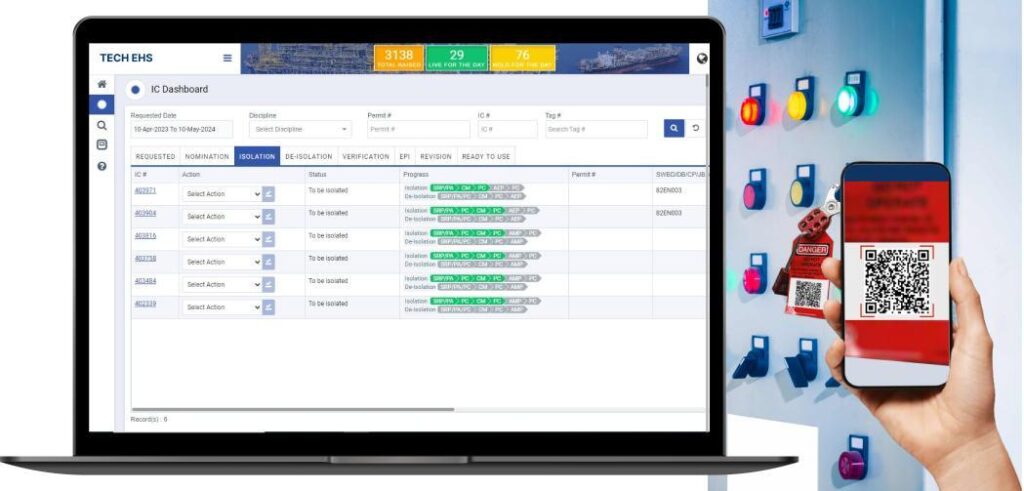
Digital Lockout/Tagout software supporting industrial safety management.
Future Trends in Lockout/Tagout Safety
Industrial safety continues to evolve.
Emerging trends include:
Smart Lockout Devices
Connected devices provide real-time monitoring and status updates.
Industrial IoT Integration
LOTO systems increasingly integrate with plant-wide safety platforms.
Mobile Applications
Workers can access procedures through smartphones and tablets.
Digital Permit-to-Work Systems
Integrated permit systems improve coordination and compliance.
Advanced Training Technologies
Virtual reality and simulation-based training enhance worker competency.
These innovations will strengthen hazardous energy control programs across industrial sectors.
Best Practices for Successful Lockout/Tagout Implementation
To maximize safety and compliance, organizations should:
- Develop equipment-specific procedures.
- Conduct regular audits.
- Train employees frequently.
- Verify all energy sources.
- Maintain lockout devices properly.
- Integrate LOTO into maintenance planning.
- Investigate violations immediately.
- Promote a strong safety culture.
Consistent application of these practices significantly improves workplace safety.
Conclusion
Lockout/Tagout (LOTO) remains one of the most important safety procedures in industrial maintenance and electrical operations. By systematically isolating hazardous energy sources and verifying a zero-energy state, organizations can prevent serious injuries, fatalities, equipment damage, and costly downtime.
For maintenance engineers, electrical technicians, supervisors, and plant managers, effective Lockout/Tagout (LOTO) implementation is not merely a regulatory requirement—it is a fundamental responsibility that protects lives and supports operational excellence.
As industrial systems become increasingly complex and interconnected, the importance of disciplined hazardous energy control will continue to grow. Facilities that invest in comprehensive LOTO programs, employee training, and continuous improvement initiatives will be better positioned to achieve world-class safety performance.
Ready to strengthen your facility’s electrical safety program? Start by reviewing your current Lockout/Tagout procedures, auditing critical equipment, and ensuring every employee understands their role in hazardous energy control.
Frequently Asked Questions (FAQ)
What does Lockout/Tagout (LOTO) mean?
Lockout/Tagout is a safety procedure used to isolate hazardous energy sources and prevent equipment from being energized during maintenance or servicing activities.
Why is Lockout/Tagout important?
LOTO protects workers from electrical shock, arc flash, unexpected machine startup, and the release of stored hazardous energy.
Who can perform Lockout/Tagout procedures?
Only authorized and properly trained personnel should perform Lockout/Tagout procedures.
What is the difference between lockout and tagout?
Lockout physically prevents operation through a locking device, while tagout provides warning information indicating that equipment must not be operated.
Why is verification important in LOTO?
Verification confirms that all energy sources have been isolated and that the equipment is in a zero-energy state before work begins.
What energy sources must be controlled during LOTO?
Potential sources include electrical, mechanical, hydraulic, pneumatic, thermal, chemical, and gravitational energy.
How often should Lockout/Tagout procedures be reviewed?
Procedures should be reviewed periodically, after equipment modifications, following incidents, and during routine safety audits to ensure continued effectiveness.