

In today’s highly automated industrial environments, electrical systems serve as the backbone of manufacturing operations, process plants, utilities, and commercial facilities. Motors, transformers, switchgear, control panels, circuit breakers, variable frequency drives, and power distribution systems are critical assets that directly impact production continuity and operational efficiency.
Unfortunately, many organizations still rely heavily on reactive maintenance strategies, addressing electrical issues only after equipment failure occurs. This approach often results in costly downtime, production losses, safety hazards, and premature equipment replacement.
To achieve long-term operational excellence, organizations must implement a structured Electrical Preventive Maintenance program. By systematically inspecting, testing, cleaning, and maintaining electrical assets before failures occur, maintenance teams can significantly improve equipment reliability, reduce unexpected breakdowns, and optimize lifecycle costs.
For maintenance engineers, electrical technicians, reliability professionals, and facility managers, understanding the principles and best practices of Electrical Preventive Maintenance is essential for ensuring safe and uninterrupted operations.
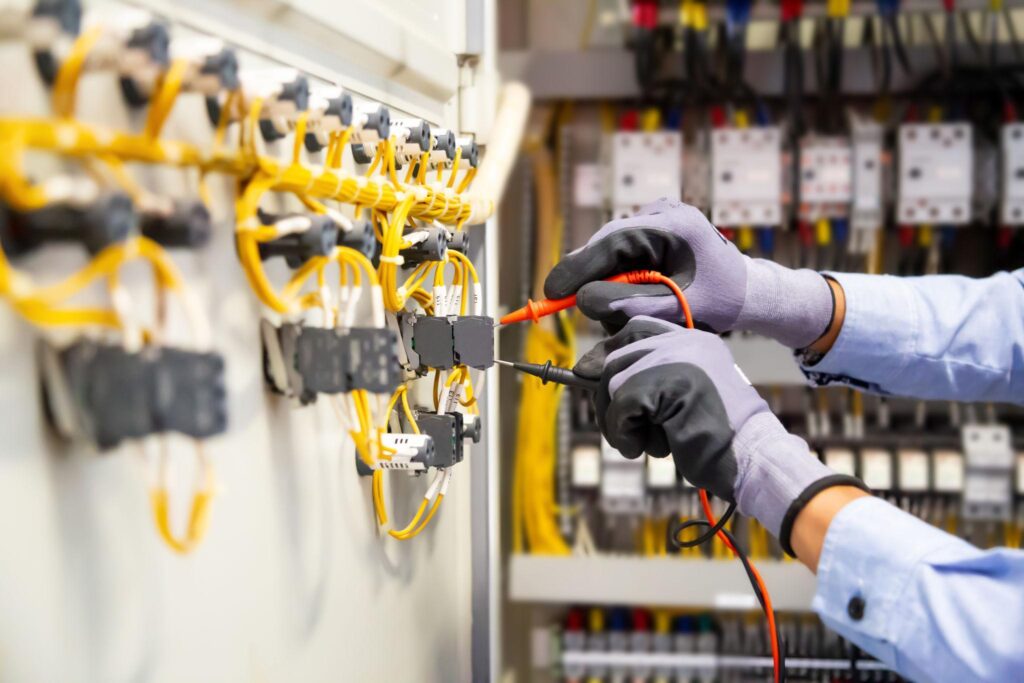
Electrical technician conducting preventive maintenance on industrial electrical equipment.
What Is Electrical Preventive Maintenance?
Electrical Preventive Maintenance (EPM) refers to the scheduled inspection, testing, servicing, and repair of electrical equipment to prevent unexpected failures and ensure reliable operation.
Unlike reactive maintenance, which addresses problems after breakdowns occur, preventive maintenance focuses on identifying and correcting potential issues before they cause equipment failure.
The primary objectives of Electrical Preventive Maintenance include:
- Improving equipment reliability
- Enhancing workplace safety
- Reducing unplanned downtime
- Extending equipment lifespan
- Lowering maintenance costs
- Improving energy efficiency
- Ensuring regulatory compliance
A well-designed maintenance program helps organizations transition from emergency repairs to planned maintenance activities.
Why Electrical Preventive Maintenance Is Critical
Electrical equipment failures can have severe consequences.
Potential impacts include:
- Production interruptions
- Equipment damage
- Fire hazards
- Arc flash incidents
- Safety risks
- Regulatory violations
- Revenue losses
Many electrical failures develop gradually through deterioration mechanisms that can be detected long before catastrophic breakdown occurs.
Examples include:
- Loose connections
- Insulation degradation
- Contamination buildup
- Overheating
- Moisture intrusion
- Component wear
Electrical Preventive Maintenance enables maintenance teams to identify these issues early and take corrective action.
Benefits of Electrical Preventive Maintenance
Increased Equipment Reliability
Reliability is one of the primary goals of preventive maintenance.
Regular inspections and testing reduce the likelihood of unexpected failures and improve system availability.
Benefits include:
- Higher uptime
- Reduced emergency repairs
- Improved production continuity
- Better operational performance
Enhanced Safety
Electrical hazards represent a major risk in industrial environments.
Preventive maintenance helps identify:
- Damaged insulation
- Overloaded circuits
- Faulty breakers
- Arc flash hazards
- Grounding issues
Addressing these conditions improves workplace safety and reduces accident risks.
Reduced Downtime
Unexpected electrical failures often result in prolonged production interruptions.
Routine maintenance helps prevent:
- Motor failures
- Switchgear malfunctions
- Transformer breakdowns
- Control system outages
As a result, organizations experience significantly lower downtime.
Lower Maintenance Costs
Planned maintenance is generally less expensive than emergency repairs.
Savings result from:
- Reduced overtime labor
- Lower spare parts consumption
- Minimized collateral damage
- Extended asset life
Improved Energy Efficiency
Electrical equipment operating under poor conditions often consumes excessive energy.
Preventive maintenance improves efficiency by:
- Tightening connections
- Cleaning components
- Correcting power quality issues
- Maintaining optimal operating conditions
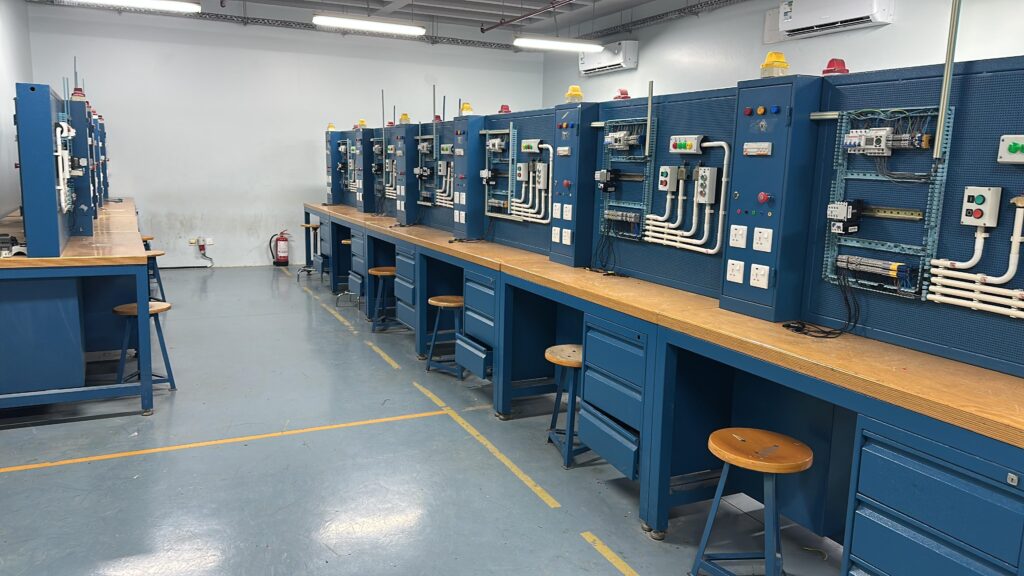
Preventive maintenance activities performed on industrial electrical systems.
Key Components of an Electrical Preventive Maintenance Program
A comprehensive Electrical Preventive Maintenance program includes multiple activities designed to evaluate equipment condition and performance.
Visual Inspections
Visual inspections provide the first line of defense against electrical failures.
Inspectors should look for:
- Burn marks
- Corrosion
- Loose hardware
- Oil leaks
- Dust accumulation
- Insulation damage
- Moisture contamination
Even simple inspections can reveal significant issues before they escalate.
Cleaning Procedures
Contamination is a major cause of electrical equipment failures.
Maintenance personnel should remove:
- Dust
- Dirt
- Oil residue
- Moisture
- Corrosive contaminants
Cleaning improves heat dissipation and reduces insulation breakdown risks.
Mechanical Inspection
Electrical equipment contains mechanical components that require periodic inspection.
Examples include:
- Circuit breaker mechanisms
- Contactor assemblies
- Motor bearings
- Cooling fans
- Switchgear linkages
Mechanical wear can directly affect electrical performance.
Lubrication
Certain electrical equipment requires lubrication of moving components.
Proper lubrication:
- Reduces friction
- Prevents wear
- Improves reliability
- Extends component life
Manufacturers’ recommendations should always be followed.
Electrical Testing Procedures
Testing is one of the most important aspects of Electrical Preventive Maintenance.
Testing identifies hidden problems that visual inspections cannot detect.
Insulation Resistance Testing
Insulation resistance testing evaluates the condition of electrical insulation.
Common applications include:
- Motors
- Cables
- Transformers
- Generators
Low insulation resistance may indicate:
- Moisture ingress
- Contamination
- Aging insulation
- Mechanical damage
Continuity Testing
Continuity testing verifies electrical circuit integrity.
Applications include:
- Grounding systems
- Protective conductors
- Control circuits
Circuit Breaker Testing
Circuit breakers must operate correctly during fault conditions.
Testing includes:
- Contact resistance measurement
- Trip time analysis
- Mechanical operation verification
Power Quality Analysis
Power quality issues can significantly affect equipment performance.
Parameters evaluated include:
- Voltage imbalance
- Harmonics
- Power factor
- Frequency stability
Correcting power quality issues improves reliability and efficiency.
Infrared Thermography in Electrical Preventive Maintenance
Infrared thermography has become one of the most valuable predictive maintenance tools.
Thermal imaging cameras detect abnormal heat patterns that indicate developing electrical problems.
Common thermal anomalies include:
- Loose connections
- Overloaded conductors
- Unbalanced phases
- Faulty breakers
- Deteriorating insulation
[Image: Infrared thermography inspection of electrical switchgear revealing hot spots and overheating connections – Credit: Thermal Imaging Solutions]
Alt Text: Infrared thermal inspection identifying electrical hot spots in switchgear.
Benefits of Thermography
- Non-contact inspection
- No production interruption
- Early fault detection
- Improved safety
- Reduced downtime
Thermal inspections should be performed regularly on critical equipment.
Preventive Maintenance for Electrical Motors
Electric motors are among the most critical assets in industrial facilities.
Motor failures can disrupt entire production processes.
Inspection Checklist
Maintenance activities should include:
- Bearing inspection
- Vibration analysis
- Temperature monitoring
- Insulation testing
- Alignment verification
Common Motor Problems
Engineers should monitor for:
- Bearing wear
- Overheating
- Voltage imbalance
- Rotor defects
- Contamination
Routine maintenance significantly extends motor lifespan.
Preventive Maintenance for Transformers
Transformers represent major capital investments.
Failure can result in extensive downtime and costly replacement.
Recommended Activities
- Oil analysis
- Insulation testing
- Bushing inspection
- Cooling system maintenance
- Thermographic inspection
Dissolved Gas Analysis (DGA)
DGA is widely used to assess transformer health.
It identifies:
- Partial discharge
- Arcing
- Overheating
- Insulation degradation
Early detection prevents catastrophic transformer failures.
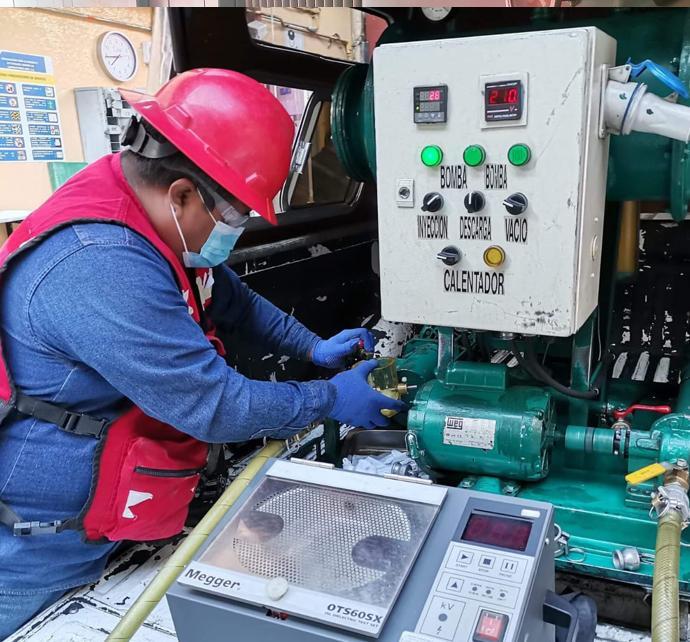
Preventive maintenance inspection of industrial power transformer.
Preventive Maintenance for Switchgear
Switchgear plays a critical role in electrical protection and power distribution.
Poorly maintained switchgear can create severe safety hazards.
Maintenance Activities
- Cleaning
- Contact inspection
- Mechanical operation testing
- Thermal scanning
- Insulation evaluation
Common Failure Modes
- Contact deterioration
- Insulation breakdown
- Moisture contamination
- Arc damage
- Mechanical wear
Regular maintenance minimizes these risks.
Preventive Maintenance for Motor Control Centers (MCCs)
Motor Control Centers are essential in industrial facilities.
Preventive maintenance should include:
- Visual inspections
- Tightening electrical connections
- Cleaning bus bars
- Breaker testing
- Thermographic surveys
MCC reliability directly impacts production continuity.
Arc Flash Prevention Through Preventive Maintenance
Arc flash incidents are among the most dangerous electrical hazards.
Preventive maintenance reduces arc flash risks by identifying:
- Loose connections
- Equipment deterioration
- Faulty protection devices
- Damaged insulation
Additional Safety Measures
- Lockout/Tagout procedures
- PPE compliance
- Arc flash studies
- Employee training
Safety should always remain the highest priority.
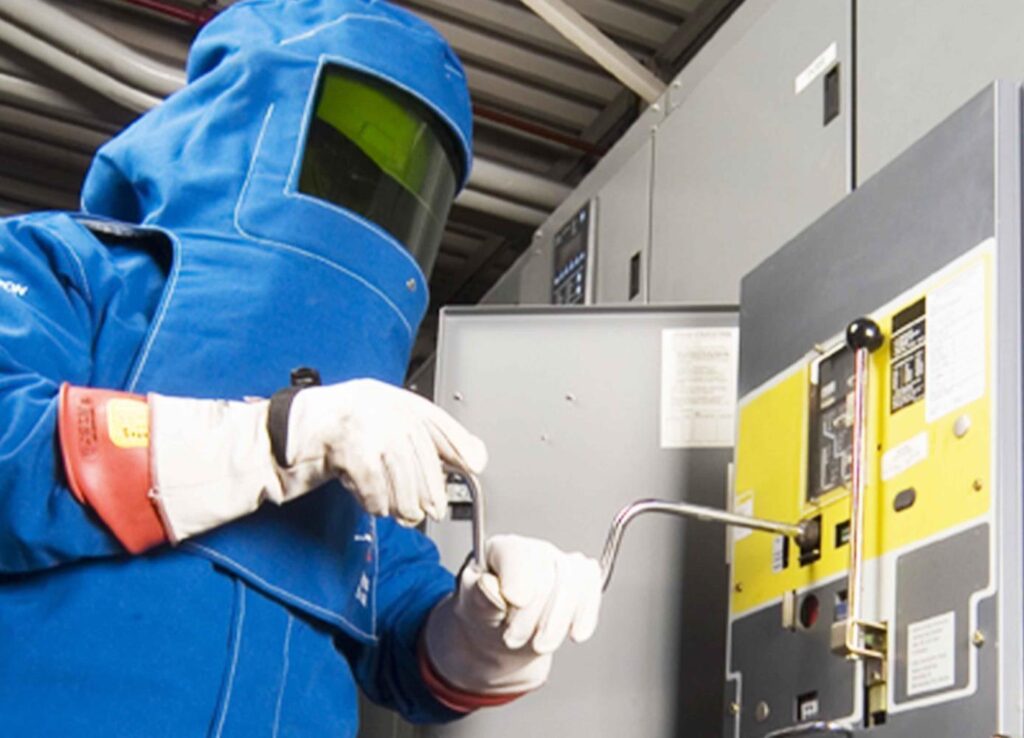
Arc flash safety procedures during industrial electrical maintenance.
Developing an Effective Electrical Preventive Maintenance Schedule
Maintenance intervals should be based on:
- Equipment criticality
- Operating conditions
- Manufacturer recommendations
- Failure history
Typical Frequencies
Monthly
- Visual inspections
- Environmental checks
Quarterly
- Connection inspections
- Cleaning activities
Semi-Annually
- Thermal imaging surveys
- Mechanical inspections
Annually
- Insulation testing
- Breaker testing
- Comprehensive system audits
Critical assets may require more frequent monitoring.
Integrating Predictive Maintenance with Preventive Maintenance
Modern facilities increasingly combine preventive and predictive maintenance strategies.
Technologies include:
- Infrared thermography
- Vibration analysis
- Ultrasonic testing
- Online condition monitoring
- IoT sensors
This integrated approach maximizes reliability while minimizing maintenance costs.
Common Mistakes in Electrical Preventive Maintenance
Many maintenance programs fail because of avoidable mistakes.
Inadequate Documentation
Accurate records are essential.
Ignoring Manufacturer Recommendations
Maintenance procedures should follow OEM guidelines.
Delayed Corrective Actions
Identified problems should be addressed promptly.
Lack of Training
Personnel must remain current with modern maintenance practices.
Overlooking Critical Assets
Maintenance resources should prioritize equipment with the greatest operational impact.
Best Practices for Maximizing Equipment Reliability
To achieve world-class reliability, organizations should:
- Develop a formal maintenance strategy.
- Implement condition monitoring technologies.
- Conduct routine thermographic inspections.
- Maintain accurate maintenance records.
- Train maintenance personnel regularly.
- Prioritize critical assets.
- Perform root cause failure analysis.
- Continuously improve maintenance procedures.
These best practices help organizations achieve sustainable reliability improvements.
Future Trends in Electrical Preventive Maintenance
The future of Electrical Preventive Maintenance is increasingly digital.
Emerging technologies include:
Industrial IoT (IIoT)
Smart sensors provide continuous equipment monitoring.
Artificial Intelligence
AI assists with fault prediction and maintenance planning.
Digital Twins
Virtual asset models improve diagnostics and optimization.
Cloud-Based Maintenance Platforms
Remote monitoring improves visibility across facilities.
Predictive Analytics
Advanced analytics identify failure risks before they impact operations.
Organizations adopting these technologies will gain significant reliability advantages.
Conclusion
Electrical Preventive Maintenance is one of the most effective strategies for maximizing equipment reliability, enhancing workplace safety, reducing downtime, and extending asset life. Through systematic inspections, testing, cleaning, thermal imaging, and condition monitoring, maintenance teams can identify developing problems long before they result in costly failures.
For maintenance engineers, electrical technicians, and reliability professionals, a structured preventive maintenance program is no longer optional—it is a critical requirement for achieving operational excellence in modern industrial facilities.
As electrical systems become increasingly complex and interconnected, organizations that invest in proactive maintenance practices will be better positioned to improve reliability, reduce lifecycle costs, and support long-term business success.
Ready to improve the reliability of your electrical assets? Start by assessing your current maintenance strategy, identifying critical equipment, and implementing a comprehensive Electrical Preventive Maintenance program that delivers measurable results.
Frequently Asked Questions (FAQ)
What is Electrical Preventive Maintenance?
Electrical Preventive Maintenance is a scheduled program of inspections, testing, cleaning, servicing, and repairs designed to prevent electrical equipment failures and improve reliability.
Why is preventive maintenance important for electrical equipment?
It reduces downtime, improves safety, extends equipment life, lowers maintenance costs, and improves operational efficiency.
How often should electrical equipment be inspected?
Inspection frequency depends on equipment criticality, operating environment, manufacturer recommendations, and failure history.
What is the role of infrared thermography in preventive maintenance?
Infrared thermography detects overheating components, loose connections, overloaded circuits, and other developing electrical faults before failure occurs.
Which equipment should be included in an Electrical Preventive Maintenance program?
Typical assets include motors, transformers, switchgear, circuit breakers, MCCs, generators, cables, and power distribution systems.
What is the difference between preventive and predictive maintenance?
Preventive maintenance follows scheduled activities, while predictive maintenance uses condition monitoring and analytics to determine when maintenance is actually needed.
How does preventive maintenance improve equipment reliability?
By identifying and correcting potential failures early, preventive maintenance minimizes breakdowns, improves availability, and extends equipment lifespan.